Why the rural–urban spectrum still matters—and how it must be rethought
In the summer of 2025, a young IT professional in Gurugram’s Cyber City finishes a late-night client call on his laptop, then steps out onto the balcony of his high-rise apartment. Below him, floodlit construction cranes tower over what was once a Haryana village; a few hundred metres away, a cluster of mud houses still houses a joint family that celebrates the same harvest festival as his grandparents did. The same week, a farmer in a remote Bundelkhand village in Uttar Pradesh sells his wheat through an e-commerce app to buyers in Mumbai while his daughter attends online classes from a government school that now has fibre-optic internet. These are not isolated stories. They are everyday Indian reality. In 2025, India is neither purely rural nor neatly urban. It is a sprawling, contradictory blend. Gleaming metro skylines sit cheek-by-jowl with bullock-drawn ploughs, and digital connectivity dissolves old boundaries faster than physical distance ever could. This is the paradox that makes Robert Redfield’s rural-urban continuum both remarkably relevant and fiercely contested in contemporary India.
This essay argues that Redfield’s continuum remains indispensable — but only when reinterpreted through Oommen’s idea of institutional core and Rao’s account of empirical hybridity.
Redfield developed the concept in the 1940s and 1950s as a deliberate break from the rigid rural-urban dichotomy that had long dominated sociology. Instead of treating village and city as two completely separate worlds, he proposed a gradual spectrum — a continuum — of societal types arranged according to increasing structural complexity. At one pole lay what he called an “ideal-type” folk society — a simplified model used for analysis: small, isolated, homogeneous, bound by intimate face-to-face relations, sacred values, and deep tradition. At the opposite pole stood the urban society: large, dense, heterogeneous, secular, anonymous, and organised through impersonal institutions and a complex division of labour. Between these poles, Redfield placed “peasant societies” — intermediate part-societies and part-cultures that maintained local intimacy while participating in a wider civilisation through the interplay of “little” and “great” traditions.

The elegance of the idea lay in its emphasis on process rather than fixed categories. Societies, Redfield argued, do not jump from folk to urban overnight; they move along a line of differentiation as size, density, occupational diversity, and external linkages increase. For decades, this framework offered sociologists a powerful tool to analyse non-Western societies without forcing them into crude binaries.
This elegant model, however, ran into serious trouble in the Indian context. No critique was more incisive than T. K. Oommen’s 1967 essay, “The Rural-Urban Continuum Re-examined in the Indian Context.”
Oommen’s attack was empirical, theoretical, and uncompromising. First, he demolished the assumption that population size and density automatically produce urban characteristics. Indian census data of the time already showed glaring contradictions: many district headquarters with fewer than 5,000 people displayed clear urban traits — bureaucratic heterogeneity, secondary groups, and anonymity — simply because they functioned as administrative centres. Conversely, hundreds of officially classified “towns” (600 out of 3,062 in 1961) remained overwhelmingly agricultural and culturally rural. Size, Oommen insisted, is a poor predictor of social reality.
Second, he demonstrated the pervasive co-existence of rural and urban traits within the same settlement. Indian cities retained joint families, caste-based neighbourhoods, and particularistic loyalties; many small towns blended pre-industrial crafts with modern administration. This constant mixing rendered the neat continuum misleading. Third, the model simply could not accommodate tribal or primitive societies, which are culturally autonomous and structurally distinct from both peasant and urban systems. Oommen therefore rejected a single rural-urban line in favour of a trichotomous typology — tribal/primitive, peasant/folk, and urban.
Most powerfully, Oommen introduced the concept of the “core institutional order” of each societal type. For peasant society, the core is the land-based agrarian economy — intense emotional attachment to land, subsistence-oriented plough agriculture, and a restricted land market, visible in practices such as MSP-dependent cropping decisions and the persistence of fragmented landholdings.
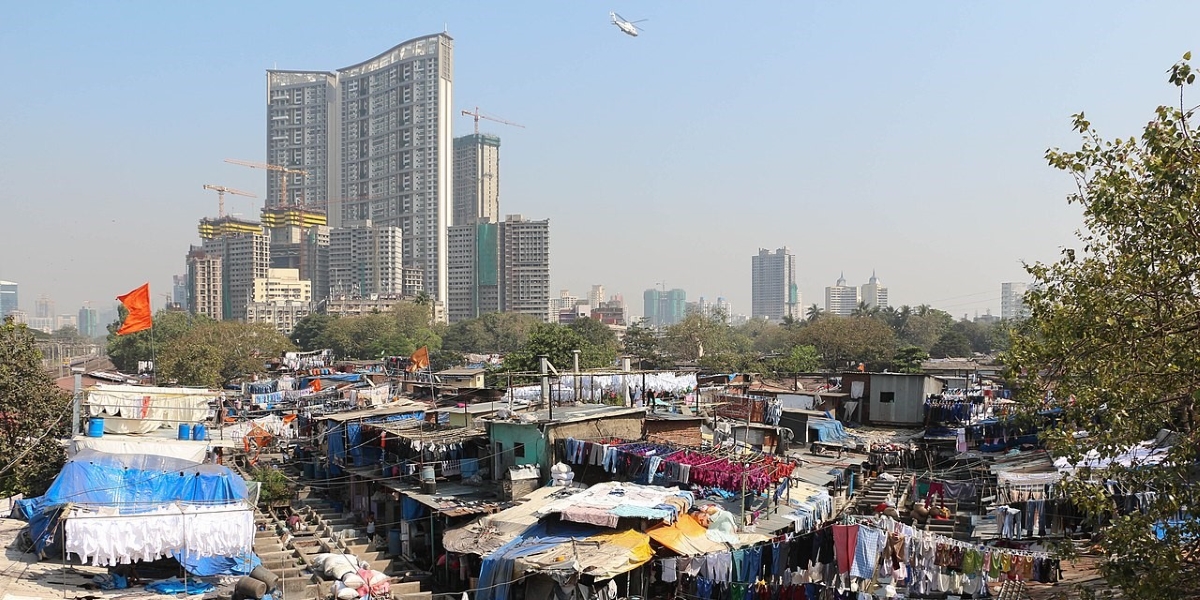
Real societal transformation occurs only when this core changes. Peripheral additions — roads, schools, panchayats, or even smartphones — may create “frayed edges” and superficial mixing, but they do not alter the essential character of the society. In the India of 2025, Oommen’s insight still cuts deep: despite digital connectivity and urban sprawl, the agrarian core in much of rural India remains stubbornly intact, fuelling farmer protests and agrarian distress even as metro India races ahead.
Yet this critique did not settle the debate. A significant opposing perspective, most clearly articulated by M.S.A. Rao and other pioneers of Indian urban sociology, defended the continuum’s practical and analytical value. Rao and his colleagues argued that the model captured precisely what Oommen treated as mere anomalies: the gradual, blended reality of Indian urbanisation. They pointed to “rurban” or fringe zones — the peri-urban villages on the outskirts of Gurugram, Hyderabad, and Bengaluru — where a farmer might lease part of his land for a new housing layout while continuing to grow vegetables on the remaining plot, and circular migrants commute weekly between village homes and urban construction sites or factories.
Caste and kinship persist across settings, but their intensity and function change along a spectrum as occupational diversity, migration, and market integration grow. For these scholars, the continuum was not a rigid evolutionary ladder but a flexible analytical tool that illuminated ongoing processes far more effectively than a trichotomy could.
The debate between Redfield, Oommen, and Rao remains analytically fertile. Redfield gave us a dynamic, processual vision that replaced sterile dichotomies with interdependence. Oommen exposed its limits rooted in its original context and offered a sharper diagnostic tool through the idea of core institutional orders. Rao reminded us that the continuum still describes the lived experience of millions of Indians navigating the messy middle ground. In today’s India — where a Jio-enabled farmer in Bihar can trade digitally while his urban migrant cousin clings to village rituals in a Mumbai slum — neither pure dichotomy nor strict trichotomy fully suffices.
The continuum, tempered by Oommen’s critique and enriched by Rao’s account of empirical hybridity, continues to provoke the right questions: Where exactly is the “core” of a community? How much mixing is superficial and how much is transformative? And what does genuine social change actually look like when tradition and modernity refuse to stay in separate boxes?
More than fifty years after Oommen’s critique, the Indian paradox endures. The same forces — rapid urbanisation, digital revolution, and relentless migration — blur boundaries. They also make understanding them more urgent than ever. Redfield’s continuum endures not because it resolves the rural–urban question, but because it refuses to let us simplify it.
Comments