The Idealism That Built the UN — and the Cynicism That Undid It How the World’s Moral Imagination Collapsed Before Its Institutions Did.
(Read more posts on Moral Philosophy, Political Theory, International Relation, Comparative Politics and religion in Substack - https://sukiraninsights.substack.com/)
This essay explores why the United Nations’ deepest crisis is moral, not structural—tracing its lost idealism, India’s ethical vision, and the tension between reform and conscience. Blending history and philosophy, it calls for moral renewal over redesign. A concise Summary, Key Takeaways, and Further Reading await at the end.
I. The Ashes and the Awakening
Eighty years ago, in October 1945, the world stood amid the ashes of its own brutality. The Holocaust had revealed the depths of human cruelty; Hiroshima and Nagasaki had shown that humankind now possessed the means to annihilate itself. Europe lay in ruins, Asia was awakening from colonial subjugation, and the moral authority of civilization itself stood discredited.
Out of that wreckage, nations gathered in San Francisco not merely to design a new institution, but to make a collective moral promise — to rebuild faith in humanity’s capacity for peace, justice, and cooperation.
The United Nations Charter (1945) — Full Text they signed was not an administrative manual; it was a moral testament. Its Preamble spoke of “saving succeeding generations from the scourge of war” and reaffirmed “faith in the dignity and worth of the human person.”
President Harry S. Truman, at the signing, declared: “This Charter will be expanded and improved as time goes on. Changing world conditions will require readjustments.” The founders understood the document as a living covenant — imperfect, yet alive with moral aspiration. It was not meant to guarantee perfection but to embody conscience.
Independent research and writing thrive on thoughtful readers and supporters. If my ideas or analysis resonate with you, consider subscribing for free and restacking the essays you find meaningful.
- Sukiran Davuluri
II. Eighty Years Later: The Crisis of Meaning
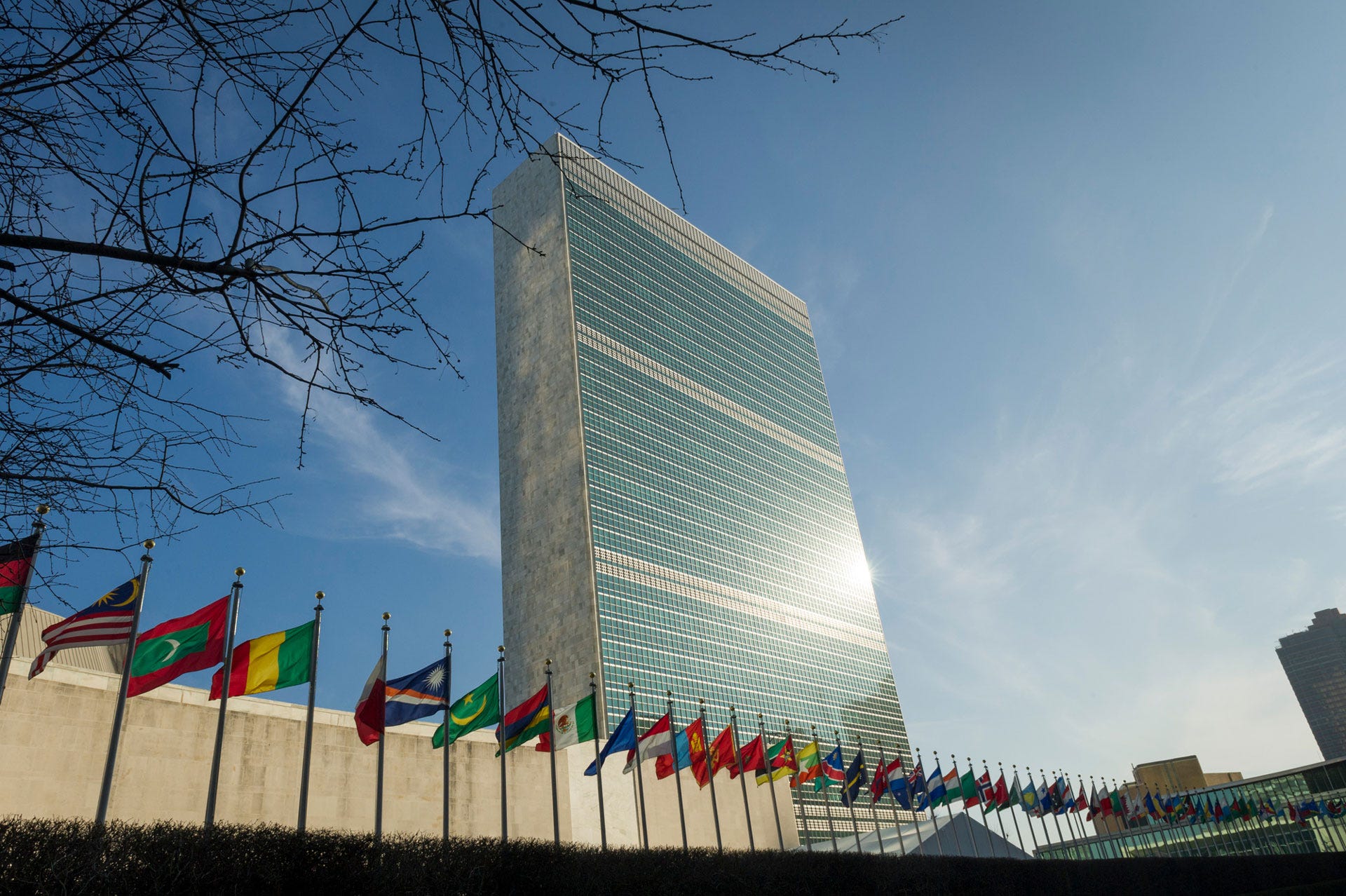
On this day, October 24, 2025 — the 80th anniversary of that founding — the world marks not only a milestone of endurance but a crisis of meaning.
At a time when cynicism about the UN’s purpose dominates global commentary — when it is dismissed as ineffective, obsolete, or morally bankrupt — this essay offers a counterpoint. It argues that the UN’s crisis is not structural but moral, not a failure of design but of conscience.
Before we rewrite its Charter, we must first rewrite our own moral imagination — the ethical vision that once made global cooperation not only possible but purposeful.
As the United Nations turns 80, the institution that once symbolized humanity’s moral awakening now struggles to remain relevant amid the very crises it was created to prevent. French President Emmanuel Macron captured the mood succinctly at the General Assembly: “This 80th anniversary isn’t a party.”
III. The Calls for Reform
The calls for reform are growing louder. From policy journals to civil-society coalitions and heads of state, many are urging a bold invocation of Article 109 — the long-dormant clause allowing for a comprehensive review conference. Recent commentary and advocacy (see, for example, PassBlue’s coverage of the debate) reflect growing momentum.
Figures such as Mary Robinson, Mia Mottley, William Ruto, and others have urged a re-examination or “reset” of the system (see reporting around UNGA80). Their case is compelling: the Charter was written before climate change, before cyberspace and AI, and its Security Council still reflects the power geometry of 1945.
And yet, as persuasive as these demands for reform sound, they share a fatal assumption — that structure, not spirit, is the key to salvation.
The truth is harder, and more uncomfortable: the United Nations does not suffer primarily from institutional obsolescence. Its deeper crisis is moral.
IV. The Necessary Precedence of Idealism
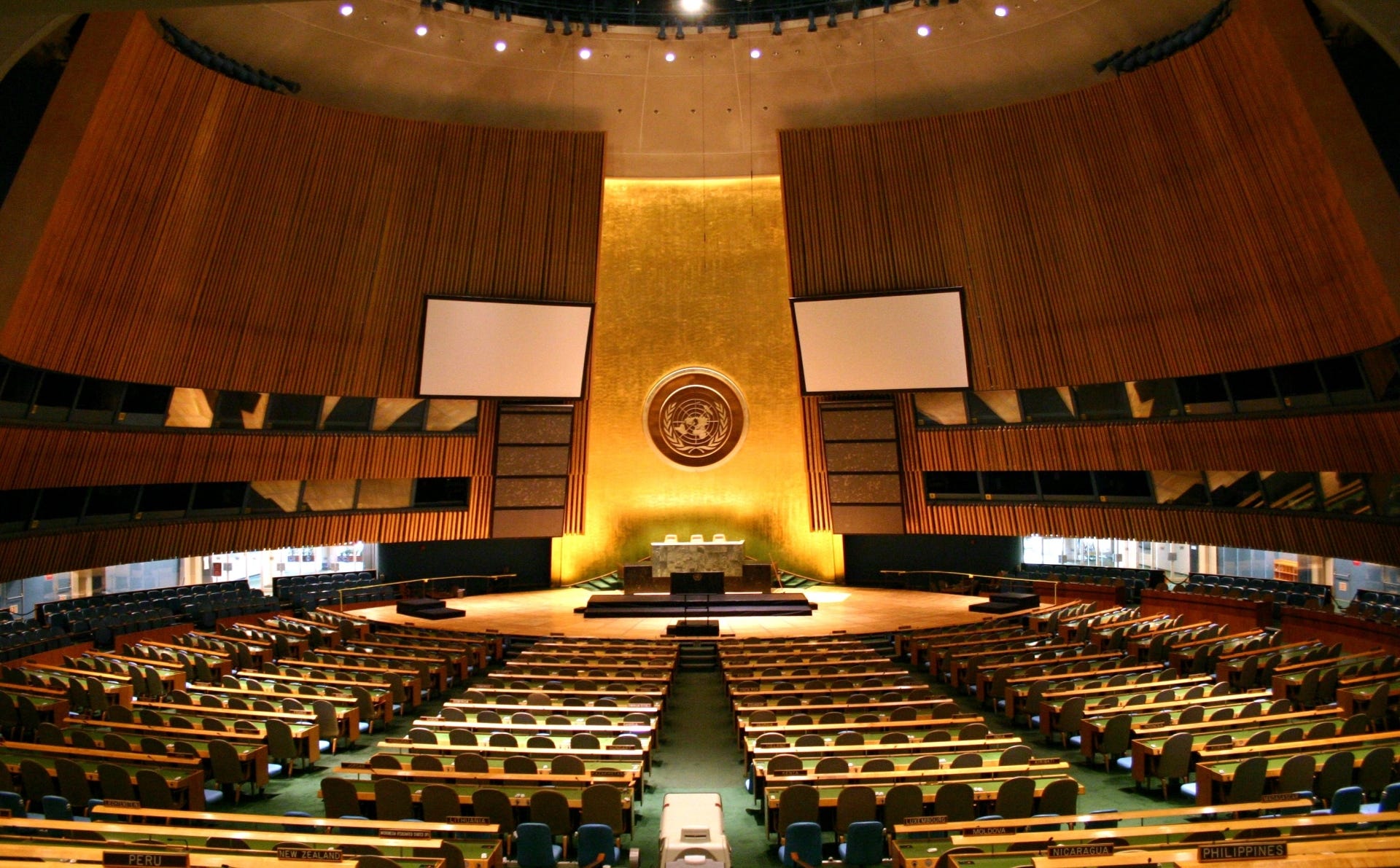
Every call for structural reform of global institutions, including proposals to rewrite the UN Charter, contains a fundamental flaw: the misplaced belief in mechanical salvation. The crisis confronting the United Nations is not that its documents are old, but that the conscience of its members has faded.
No amount of procedural tinkering — no new council, no revised veto formula — can redeem an international order in which nations consistently privilege narrow self-interest over the common good.
We must recognize that practical policy flows from idealistic imagination, not the other way around. The original Charter was a profound act of moral vision born from the ruins of war. Its enduring strength lies not in its syntax, but in its potential to be interpreted as a covenant of conscience.
Therefore, before we convene a conference to amend clauses, we must first commit to amending our conduct. The true “software upgrade” humanity requires is not institutional but ethical: an internal transformation that moves nations from asking “What serves my interest?” to “What serves the common interest?”
Without this moral renewal, a rewritten Charter will be nothing more than an eloquent but empty diplomatic ritual. The future of multilateralism depends on rediscovering the unfashionable virtue of global responsibility.
V. A Tradition of Moral Warnings
This moral diagnosis is not new; it has been voiced by the United Nations’ own statesmen and thinkers for over half a century.
In 1954, Secretary-General Dag Hammarskjöld told an audience at the University of California, Berkeley, that “the U.N. was not created to take mankind to heaven, but to save humanity from hell.” His colleague Brian Urquhart later warned that “you can redesign the Security Council a hundred times, but if great powers refuse to act in good faith, nothing changes.” With Erskine Childers, Urquhart warned that Charter-revision debates often distract from “the deeper issue: the unwillingness of states to subordinate national interest to collective responsibility.”
Later generations echoed the same principle. The Commission on Global Governance’s 1995 report, Our Global Neighbourhood, emphasized that global governance fails when a sense of global community is weak. Edward Luck, Shashi Tharoor, Conor Cruise O’Brien, and others have reiterated the theme: reform without moral renewal risks being cosmetic.
Across decades, these voices converge on one truth: no institutional reform can substitute for moral renewal.

VI. A Moral Tradition Beyond Borders: The Indian Vision
As an Indian and a student of the national movement and its universalist debates, I cannot separate the UN’s moral crisis from the deeper historical question that animated India’s own struggle for freedom — how to reconcile moral idealism with political action.
Rabindranath Tagore, in essays such as Nationalism in the West (full text available), warned against mechanistic nationalism and urged an ethical unity born of sympathy. In Sadhana: The Realisation of Life (full text), he framed global harmony as an inner moral expansion.
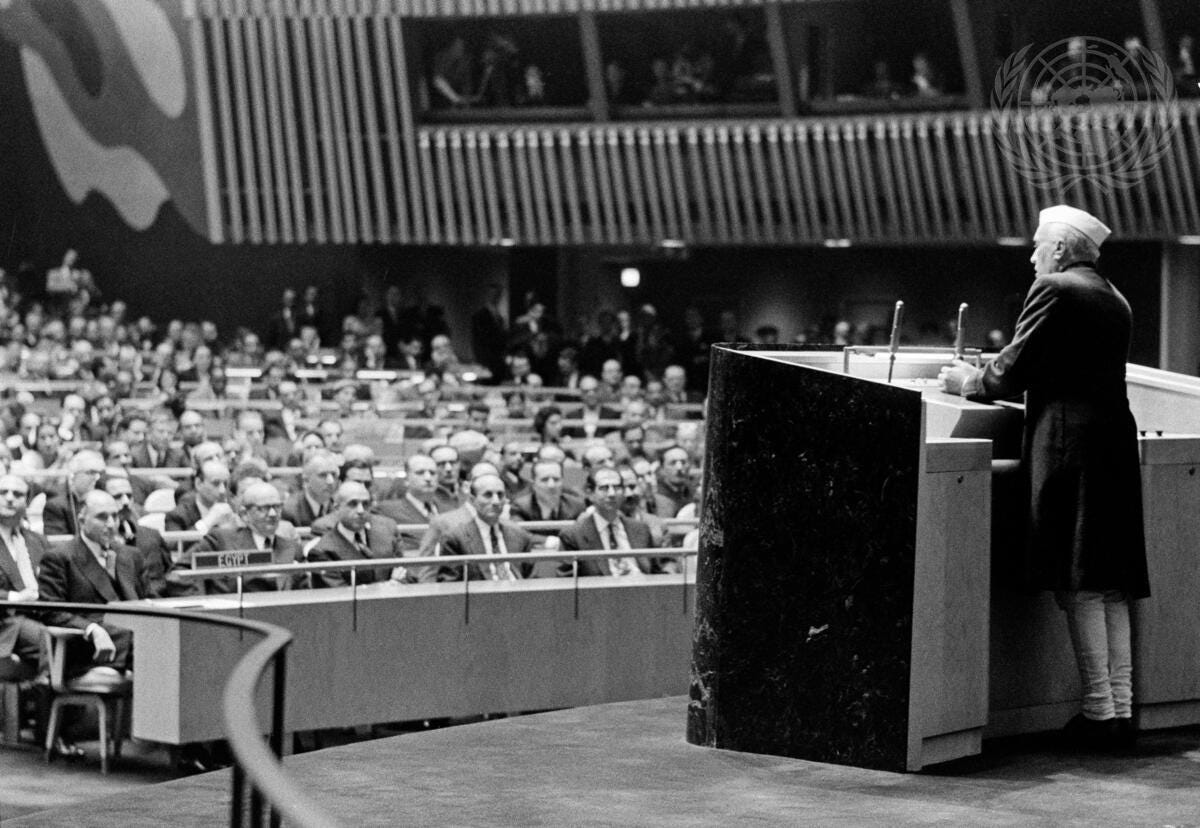
Jawaharlal Nehru, an original signatory and advocate of ethical internationalism, spoke of peace as “a condition of mind brought about by a serenity of soul” — a reminder that institutions cannot substitute for moral self-limitation.
Together, Tagore’s poetic idealism and Nehru’s pragmatic ethics reinforce a timeless truth: practical policy flows from idealistic imagination, and the UN’s renewal begins with re-inhabiting the moral covenant that birthed it.
VII. The Structuralist Rebuttal: Reform as Redemption
Yet there remains a powerful school of thought that insists moral renewal without structural redesign is sentimentalism.
Contemporary reformists such as Vesselin Popovski and Thomas G. Weiss, and initiatives like the Global Governance Forum’s “It’s Time for a New UN Charter” project argue that meaningful change requires Charter amendment.
Popovski’s policy brief, Revising the United Nations Charter (Stimson Center, 2024 — PDF), calls the veto a “life-threatening provision” and outlines proposals for a Second Charter: a World Parliamentary Assembly, a Global Environmental Agency, and institutional innovations to anchor planetary stewardship.
The Global Governance Forum has also published an extended proposal, A Second United Nations Charter (PDF), framing a “Constitutional Moment for Humanity.” These contributions are substantive and urgent: structural design can matter greatly for incentives and accountability.
VIII. A Moral Counterpoint
This critique deserves respect. Structural paralysis does magnify human suffering. But even if the veto vanished tomorrow, the deeper malady would persist.
The veto did not create moral failure; moral failure created the veto’s abuse. Institutions reflect the political will that animates them; redesigning the mirror cannot redeem the face it reflects.
The UN’s crisis is not only procedural; it is civilizational. The same national egos that exploit the veto would find new procedural tools to protect privilege.
The real work of reform, therefore, begins not with drafting committees but with moral re-education — restoring the ethical self-limitation that animated the founders of 1945. Ethical courage must precede structural courage; without it, new machinery will be managerialism in a moral costume.
Redirecting diplomatic energy from endless institutional tinkering toward trust-building, empathy, and restraint would yield far richer returns for multilateralism than another round of technical redesign. The spirit of cooperation — not the scaffolding of procedure — sustains peace.
IX. Niebuhr’s Moral Realism
Reinhold Niebuhr’s moral realism offers profound support to this argument. Writing in Moral Man and Immoral Society (1932), Niebuhr exposed the paradox of modern civilization: while individuals are capable of self-transcending morality, collective entities—nations, classes, institutions—magnify egoism under the guise of virtue. “The unselfishness of individuals,” he wrote, “makes for the selfishness of nations.”
For Niebuhr, structural arrangements such as laws, charters, or organizations can restrain injustice, but they cannot produce justice. The deepest failures of human cooperation arise not from design but from the moral corruption of will. Hence, in The Children of Light and the Children of Darkness (1944), he insisted that “Man’s capacity for justice makes democracy possible; man’s inclination to injustice makes democracy necessary.”
Applied to the United Nations, Niebuhr’s insight reveals that no Charter revision, however imaginative, can succeed unless nations cultivate humility, self-restraint, and moral awareness. Institutions merely mirror the spirit of those who animate them. Niebuhr’s realism thus reinforces—not contradicts—the essay’s thesis: the crisis of global governance is a crisis of conscience. The machinery of peace cannot redeem humanity unless humanity first redeems the moral imagination that sustains the machinery.
X. The Final Lesson
Reform without conscience is noise.
The Charter does not need to be replaced; it needs to be re-inhabited — by the moral imagination that created it. Before we rewrite its words, we must restore the values those words once represented.
Because it is not the Charter that has grown old.
It is our conscience that has.
And in the end, we are all inhabitants of the same world. Whatever happens to the world happens to us — and whatever we do to it, we do to ourselves.
Summary
The essay argues that the United Nations’ crisis is not structural but moral. While reformists call for rewriting the Charter, the real challenge lies in renewing the ethical conscience of nations. Drawing on Hammarskjöld, Urquhart, Tagore, and Nehru, it contends that institutions mirror the morality of those who sustain them. Without restoring trust, empathy, and restraint among states, even the most visionary redesign will fail. The future of the UN — and of global governance — depends on moral imagination over mechanical change.
7 Key Takeaways
The UN’s crisis is moral, not mechanical.
Moral renewal must precede institutional reform.
Institutions reflect, not create, virtue.
India’s moral-philosophical legacy offers clarity.
Reformist thinkers diagnose symptoms, not the cause.
Diplomatic energy should shift from mechanics to morality.
Humanity’s conscience is the real Charter.
References
United Nations — Full text of the UN Charter (1945).
Dag Hammarskjöld — Address to University of California, Berkeley (1954).
PassBlue — “The UN Needs a Major Reset. A Charter Review Could Make It Happen.” (Oct 15, 2025).
Global Governance Forum — “It’s Time for a New UN Charter” (Feb 7, 2025).
Global Governance Forum — A Second United Nations Charter (PDF, Sep 1, 2025).
Vesselin Popovski — Revising the United Nations Charter (Stimson / GGIN policy brief, Apr 2024) — PDF.
Commission on Global Governance — Our Global Neighbourhood (1995) — UNESCO record / archive.
Tagore — Nationalism in the West (archive.org).
Tagore — Sadhana: The Realisation of Life (archive.org PDF).
Comments