From Post-War Moral Consensus to Normalized Authoritarianism
Europe once learned, at devastating cost, that democracy was a moral achievement before it was a procedural one. That lesson is now being unlearned—not through rupture or revolt, but through normalization.
Europe’s twentieth century delivered its lessons with a cruelty that left little room for ambiguity. Totalitarian regimes were not abstract pathologies or unfortunate deviations; they were lived catastrophes, etched into cities, institutions, families, and moral vocabularies. When the war ended, Europe did not merely rebuild its shattered infrastructure; it rebuilt its political imagination.
As Tony Judt argued in Postwar, Europe became truly “post-war” only when it renounced the belief that war—or civilizational struggle—was an acceptable solution to deep social, political, or economic conflict. Peace, prosperity, and security were not accidental by-products of exhaustion; they were conscious achievements, sustained through institutions, norms, and a shared moral memory forged in the shadow of catastrophe.
For several decades, this settlement held. Western Europe internalized the trauma of its past, while Eastern Europe, after 1989, sought belated entry into that moral and institutional order.
The post-war decades were not free of conflict, but they were defined by a refusal to sacralize politics or to resolve disagreement through existential struggle. Yet today, as Allan Kaval’s reporting on Giorgia Meloni makes clear, Europe confronts a paradox far more unsettling than the return of crude fascism. What is emerging instead is something subtler, more adaptable, and more dangerous: the normalization of post-ideological authoritarianism.
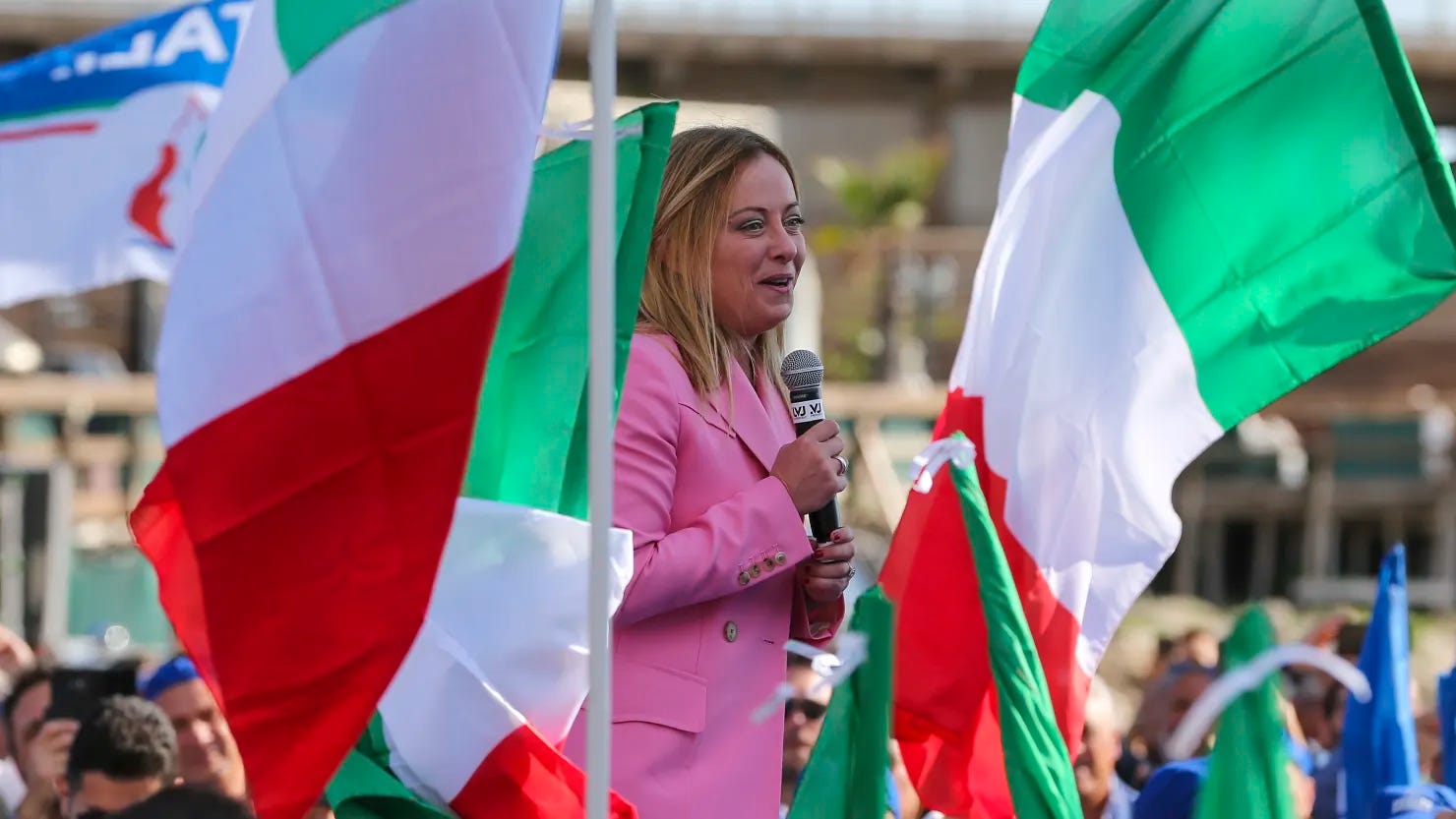
Meloni’s Italy is not marching in black shirts, nor is it staging coups or abolishing elections. Its danger lies elsewhere—in the quiet erosion of liberal democratic culture under the banner of democratic legitimacy. Her public intervention against the University of Bologna’s academic autonomy is revealing not because it is spectacular, but because it is banal.
“Ideology” is deployed as an accusation, autonomy is rhetorically inverted into obstruction, and dissent is reframed as hostility to the national interest. None of this requires dismantling democracy. All of it requires redefining democracy as unmediated majoritarian power, stripped of liberal restraint.
Post-ideological authoritarianism does not arrive with banners or manifestos. It advances through stabilization, external respectability, and the quiet erosion of counter-powers, until domination appears indistinguishable from governance and democratic decline is mistaken for political maturity.
The debate among Italian political scientists reflects this ambiguity. Cas Mudde’s concept of “radical right-wing populism,” once adequate, now appears insufficient. The newer label of “national conservatism” reassures that institutions will discipline power and that governance will moderate ideology.
Giovanni Orsina’s metaphor of “Romanization” rests on a comforting assumption: that proximity to institutions civilizes those who once challenged them.
Yet this assumption misreads both history and the present. Meloni is not a populist interloper produced by the resentments of the 2000s. Her lineage runs deeper, into the memory culture of Italian neo-fascism and the politics of grievance forged in the 1970s.
As Miguel Gotor notes, this is a politics shaped by marginality, ritual, and a cultivated sense of defeat. Meloni herself calls it “a score to settle”—a phrase that captures the moral psychology of revanchism more precisely than abstract theory.
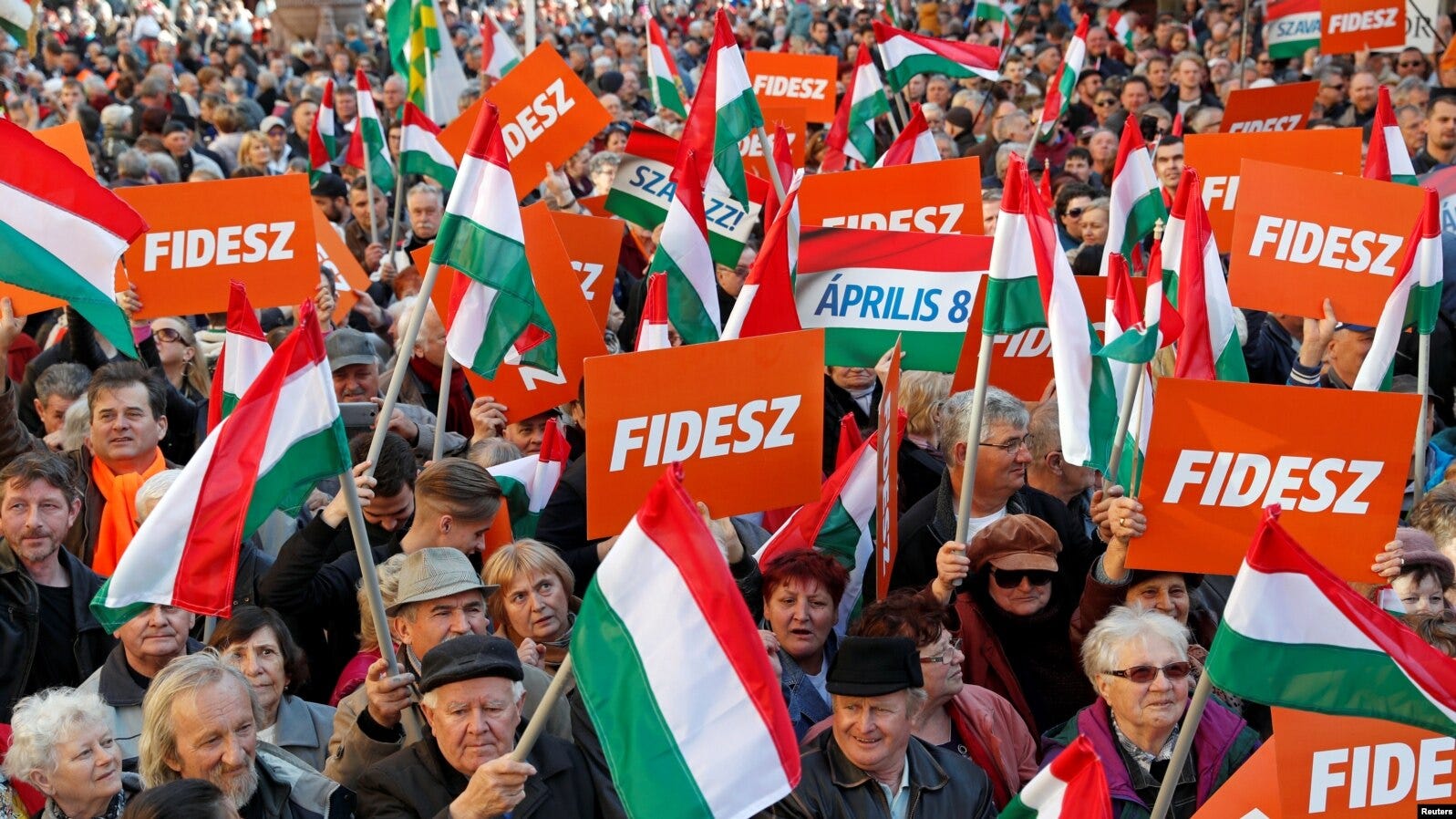
What distinguishes today’s reactionary regimes from those of the twentieth century is not restraint but post-ideological ambition. Classical totalitarianisms were driven by comprehensive doctrines promising historical redemption. Today’s revanchist regimes—Russia under Putin, Hungary under Orbán, Turkey under Erdoğan—are animated less by ideology than by domination. Power is no longer a means to an end; it is the end itself.
This shift cannot be understood without attending to the conditions that make such power desirable. In periods of compounded upheaval—economic disruption accelerated by social media and artificial intelligence, social dislocation produced by migration from fragile regions, and political exhaustion caused by the erosion of the social compact—citizens lose more than material security. They lose belonging and, more decisively, control over their own fate.
When agency appears powerless in the face of opaque markets and unresponsive institutions, power acquires compensatory appeal. Leaders who project decisiveness and bravado are admired; institutions that restrain power appear obstructive or obsolete.
This helps explain admiration for strongmen across contexts: from Yogi Adityanath in India, to Nigel Farage, Donald Trump, Elon Musk as a political-cultural figure, and Vladimir Putin globally. Nothing illustrates this logic more starkly than Putin’s popularity in societies whose constitutional values stand in direct contradiction to his regime. India is revealing here.
From the erudite yet rhetorically forceful foreign minister S. Jaishankar, who invokes Russia as a symbol of civilizational autonomy, to regional media anchors celebrating Putin’s decisiveness, admiration cuts across elite and popular registers. This cannot be explained by shared ideals. It reflects a desire for concentrated power and vicarious agency in a disorienting world.
Giorgia Meloni’s consolidation of power over the past two years shows how this logic becomes institutionalized. Stabilization itself is recast as democratic virtue. High abstention, a fragmented opposition, and a disciplined coalition allow continuity to appear as renewal.
Her party’s improved electoral performance reinforces the perception that she has ended the turbulence of Italy’s populist decade. Crucially, this internal stabilization has been paired with external respectability.
By aligning with NATO on Ukraine, cultivating pragmatic ties with Brussels, and positioning herself as a central actor in Europe’s migration policy, Meloni has satisfied what Italian discourse calls the “external constraint.”
Yet international legitimacy has coincided with growing pressure on democratic counter-powers at home. Conflicts with the judiciary, legal intimidation of journalists, the subordination of public broadcasting, and attempts to neutralize judicial oversight are no longer episodic but structural. Migration policy has become the hinge between these domains.
Framed as technocratic cooperation, agreements with third countries normalize the sidelining of human rights and legal safeguards in exchange for order. What appears as governance competence thus masks a deeper transformation: democracy redefined as stability without restraint, legitimacy without limits.
When democratic politics loses its moral imagination and is reduced to technocratic management, citizens cease to experience themselves as agents. In that vacuum, concentrated power becomes desirable, and restraint itself comes to appear as weakness rather than as the condition of freedom.
Any honest account must also confront the political exhaustion of the post-war center-left. If democracy is a moral achievement, it cannot survive on procedures alone. Over time, large segments of the democratic center allowed that moral imagination to atrophy, substituting ethical persuasion with technocratic management. Politics was reduced to optimization—growth targets, fiscal discipline, regulatory compliance.
The center did not lose credibility because it lacked competence; it lost resonance because it ceased to speak to citizens as moral agents capable of judgment and action. This withdrawal produced the vacuum into which post-ideological authoritarianism advanced.
Here Hannah Arendt becomes indispensable. She located the ethical foundations of democracy not in abstract rights but in the human conditions of plurality, action, natality, judgment, and amor mundi. Politics, for Arendt, exists only where distinct yet equal individuals appear before one another in a shared world. Plurality demands recognition of the inviolable worth of the other—not despite disagreement, but because disagreement discloses reality.
Post-ideological authoritarianism erodes this condition without terror. It stigmatizes dissent, transforms opponents into internal enemies, and encourages conformity through pressure rather than force. What Arendt called the “banality of evil” reappears not as fanaticism but as thoughtlessness, institutional cowardice, and moral disengagement.
Liberal democracy therefore requires more than elections. It requires restraint, mutual recognition, institutional autonomy, and an acceptance of limits rooted in the recognition of the inviolable worth of the fellow citizen—however sharp our disagreements. Without this ethical foundation, democratic procedures become hollow shells, easily appropriated by those who seek domination without responsibility.
Meloni’s Italy is not an exception but a signal. She differs from Trump or Orbán not in kind but in degree. The danger lies in believing this drift is manageable rather than structural. History’s lessons, when ignored, do not vanish.
They return altered and harder to confront. Europe once learned, at devastating cost, that democracy is a moral achievement before it is a procedural one. That lesson is now being tested again—not by tanks, but by normalization.
Comments