Gandhiji’s Assassins, Then and Now - Savarkar, Hindutva, and the Reversal of India’s Moral Inheritance
Today marks the death anniversary of Mahatma Gandhiji. In India, it is observed as Martyrs’ Day, a moment intended not merely to recall the assassination of January 30, 1948, but to reckon with the moral and political vision for which Gandhiji was killed. That vision asked for a republic in which citizenship was not tied to religious belief, where difference did not provoke suspicion or accusations of treason, and where state power remained constrained by ethical limits and larger purposes rather than driven by the passions of an agitated majority.
The distance India has travelled from that vision is perhaps most clearly illuminated by an incident recalled by Ramachandra Guha, one of Gandhiji’s most serious biographers and the foremost historian of post-independence India. The episode took place in the early 1990s in Ayodhya, by then the symbolic centre of a rising politics of religious majoritarianism.
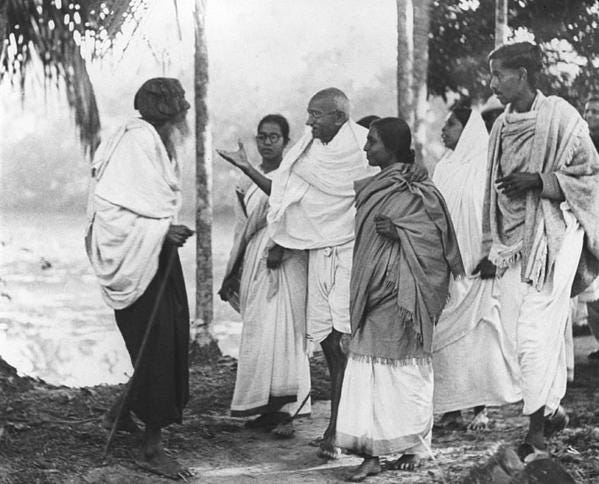
Sushila Nayar, a veteran Gandhian and one of Gandhiji’s closest associates, had gone there to promote communal harmony. At an inter-faith prayer meeting, she led the singing of Raghupati Raghav Raja Ram, a bhajan Gandhiji cherished for its ethical universalism. When the hymn reached the line Ishwar Allah Tero Naam, a group of protesters surged forward and forcibly stopped the singing.
Nayar, already elderly, tried to reason with them. “Hum Gandhiji ki taraf se aaye hain,” she said. We have come on behalf of Gandhiji. The reply was immediate and chilling in its clarity. “Aur hum Godse ki taraf se.” We have come on behalf of Godse.
Ayodhya did not become the epicentre of the Hindutva movement simply because of its association with Ram. It acquired that role because it offered a stage on which a particular political imagination could be asserted. At the heart of that imagination lay an older ideological claim: that large sections of India’s religious minorities, especially Muslims and Christians, were insufficiently rooted in the nation’s civilisational past and therefore suspect in their political loyalty.
The Ram Janmabhoomi movement drew its energy less from devotion to Ram or the ethical ideals associated with him than from this logic of exclusion. Its animating impulse was the assertion of cultural supremacy, the insistence that political authority must rest on the dominance of a single religious identity.
Seen in this light, the exchange between Nayar and her hecklers was not simply an interruption of a prayer. It was a declaration of allegiance, spoken without embarrassment, to Gandhiji’s assassin. To understand what was being claimed in that moment, it is necessary to confront directly what Nathuram Godse represented.
Godse was not a marginal fanatic acting alone. He was an intensely idealistic and disturbingly resolute embodiment of one of the most consequential ideological currents within the Indian national movement, a current most coherently articulated by Vinayak Damodar Savarkar.
“Violence can destroy power; it is utterly incapable of creating it.”
— Hannah Arendt, On Violence
Godse’s political and moral universe was shaped directly by Savarkar’s ideas, and Savarkar, by multiple historical accounts, played a decisive role in planning the assassination of Gandhiji and in procuring the weapon used to carry it out. This was no coincidence. Savarkar had been a lifelong and uncompromising opponent of everything Gandhiji represented.
At the centre of Savarkar’s hostility lay a fundamental disagreement over the meaning of strength, masculinity, and national survival. He believed that Gandhiji’s insistence on non-violent resistance weakened Hindus, cutting them off from what he imagined as a long tradition of martial courage and armed resistance against Islamic invaders from the tenth century onward. Gandhiji, in this reading, was not choosing an alternative method. He was draining the nation of its vitality. Non-violence was not moral courage but civilisational surrender.
This disagreement ran deeper than tactics. It entered the terrain of political theory. Savarkar rejected the idea that a nation grounded in liberal, inclusive nationalism could be cohesive or durable. Unity, as he understood it, could not emerge from pluralism or restraint. It required uniformity. Discipline. A shared cultural identity imposed rather than negotiated. For India to survive and assert itself as a great power, he argued, it needed cultural nationalism, not the moral universalism Gandhiji insisted upon.
Savarkar’s nationalism was not religious in the conventional sense. He was an avowed atheist and openly contemptuous of many practices central to orthodox Hinduism, including ritual piety and cow worship. His hostility toward minorities was not theological but civilisational. India, in his view, was fundamentally a Hindu nation defined by common culture, language, history, and symbolic geography. Muslims and Christians could remain only by subordinating themselves fully to this cultural order.
In Savarkar’s scheme, subordination was never meant to grow out of persuasion. It was not something to be chosen. Conciliation, in his eyes, was weakness, a form of surrender disguised as tolerance. Cultural conformity had to be imposed. Through pressure. Through coercion. And where resistance endured, through violence.
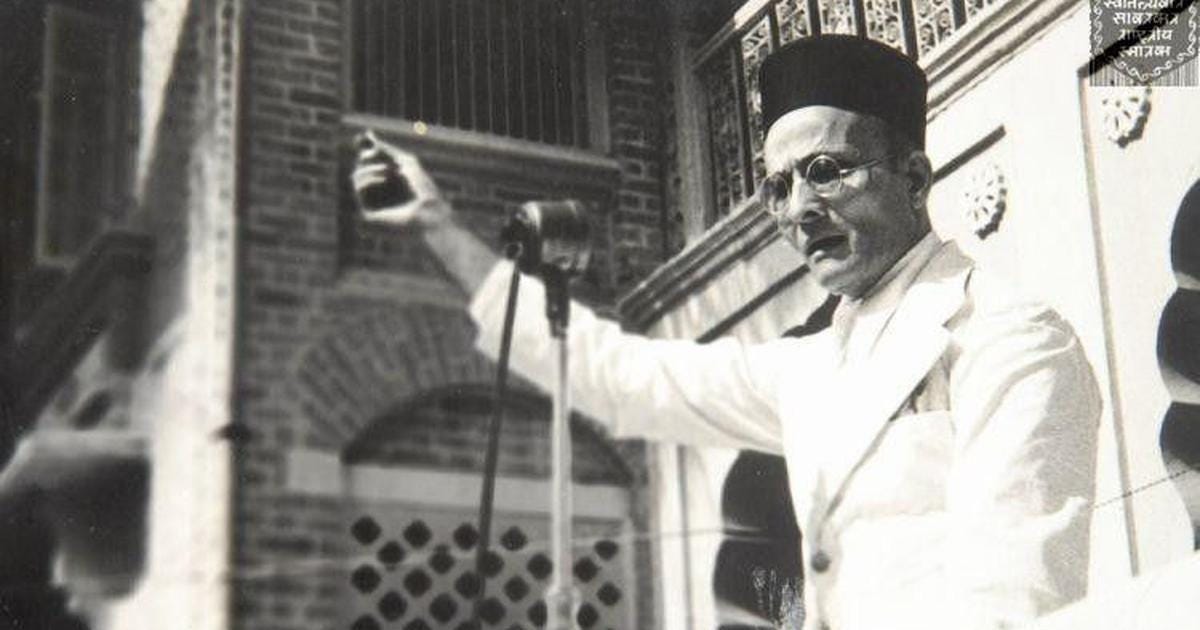
Those who refused to submit to the Hindu cultural order would, as he saw it, lose their claim to the nation. Citizenship was not an inherent right but a conditional privilege. Outside conformity lay exclusion. Outside exclusion lay expulsion. Constitutional protection would not apply to those who stood apart. Civil rights could be withdrawn. In the final reckoning, departure from the country itself could be demanded.
Savarkar watched Europe closely during the interwar years, when fascist and Nazi movements had risen to power. He admired their emphasis on discipline, homogeneity, and force as instruments of national renewal. He was drawn to the belief that societies could be remade through organised coercion. What he attempted was not imitation, but adaptation: the translation of these doctrines into an Indian setting. In doing so, he articulated one of the earliest Indian visions of cultural authoritarianism, rooted in hierarchy and exclusion rather than consent.
Gandhiji stood at the farthest possible distance from this vision. Not only in theory, but in the daily conduct of his politics. He saw fascism and Nazism not as signs of strength, but as symptoms of moral collapse. To him, a nation built on fear could not endure. A society organised around exclusion would eventually fracture. Stability, he believed, could arise only from restraint. Unity only from plurality. Power only from the recognition of equal moral worth.
For Gandhiji, courage, bravery, and the spirit of sacrifice carried a deeper, civilisational meaning. Courage, in his understanding, was not the capacity to inflict suffering on others, but the willingness to endure suffering for the sake of the community. It demanded self-discipline rather than aggression, restraint rather than vengeance.
“Non-violence is the greatest force at the disposal of mankind. It is mightier than the mightiest weapon of destruction devised by the ingenuity of man.”
— Mahatma Gandhi, Young India
He believed that it required far greater courage to refuse the temptation of violence than to strike back at an oppressor. To kill the oppressor or to destroy oppression by force was, for him, the easier path. The harder task was to transform the oppressor’s heart and mind so completely that oppression itself lost its foundation. Only when the logic of domination was dissolved, he believed, could violence truly end. In that transformation lay the possibility of turning an enemy into a lifelong friend and a fellow citizen.
The assassination must be read against this deeper conflict. It was not simply an act of personal hatred, nor the work of an isolated extremist. It marked the violent settling of a long-standing ideological struggle between two incompatible ideas of India. Godse did not kill Gandhiji despite Savarkar’s ideas. He acted in their name.
By the time the rest of the world began to grapple with the rise of illiberal nationalism elsewhere, India had already lived through its consequences. Long before the election of Donald Trump in 2016, India’s experiment with Hindutva had been underway, deep and sustained. Its effects were not theoretical. They unfolded in institutions, on streets, and in the everyday experience of citizenship.
The insistence that unity must be achieved through cultural uniformity, and that conformity may legitimately be enforced, produced repeated moments of rupture. Communal violence did not appear as an aberration. It became recurrent. The most consequential of these episodes followed the burning of a train coach at Godhra in 2002 and the violence that spread across Gujarat under the watch of Narendra Modi, then Chief Minister of the state where Gandhiji was born and raised. That episode marked a turning point, not simply in the breakdown of order, but in the public legitimisation of majoritarian violence.
Alongside such moments were countless smaller ones. Attacks on minority religious and cultural organisations. Vigilante actions justified in the language of civilisational defence. Laws framed as protection but applied selectively and punitively. Over time, these practices ceased to shock. They settled into routine.
Under the present ruling dispensation, what had once appeared as excess hardened into normality. Violence, whether exercised by the state or by self-appointed guardians of the majority, came to be explained rather than condemned. Acts that should have provoked outrage were reframed as necessity. The recognition of the constitutional right of minorities to practise, propagate, or defend their faith was no longer treated as a legal guarantee. It was recast as a provocation. To assert such rights was increasingly described as betrayal.
"The majority rule is not an end in itself. It is only a means to an end. The end is to see that the government of the country is carried on in a manner which is to the interest of all, including the minority. The test of a government is the degree to which it is able to satisfy the minority."
Dr. B. R. Ambedkar, Chief architect of Indian Constitution and an exponent of social justice in Indian Society
This reversal steadily hollowed out the constitutional order. Rights guaranteed in law came to be treated as dangers in practice. The civic space in which disagreement could exist without fear grew narrower by degrees. In its place emerged vigilance, suspicion, and a culture of moral policing.
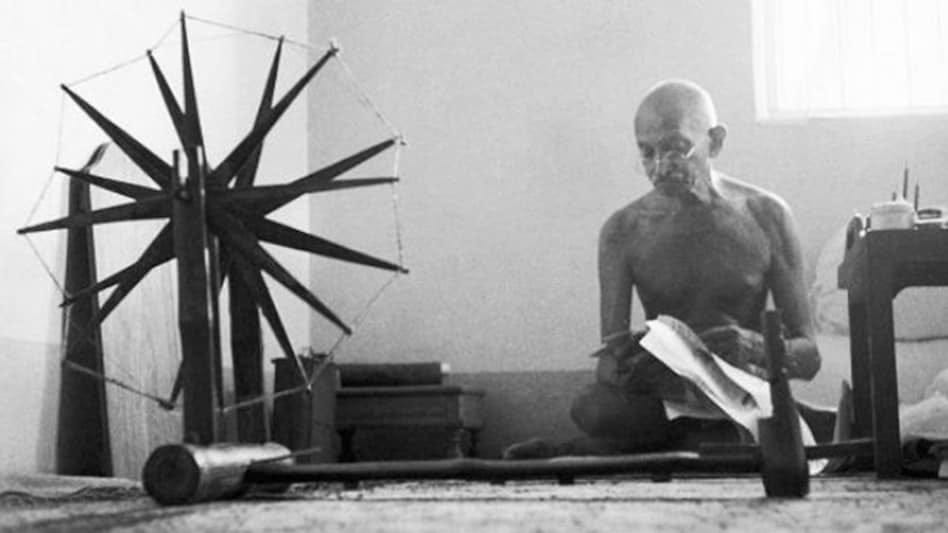
Gandhiji had warned against this outcome with clarity and persistence. He did not regard civil liberties as favors extended by a dominant majority, but as the moral ground on which a free society rests. The freedom to speak, to dissent, to believe differently, and to propagate those beliefs without fear was, for him, inseparable from the idea of India itself. Violence, in his understanding, was never merely a crime. It signaled the breakdown of politics.
The legacy of Hindutva’s drive toward enforced unity has been the gradual spread of fear. Fear among religious minorities, for whom rights have become conditional. Fear among conscientious citizens, who see the Constitution not as a tactical instrument but as a moral covenant. And fear grounded in the understanding that once rights are made conditional, no one remains secure for long.
The exchange in Ayodhya now reads less like an isolated provocation than like an early warning. It revealed, in compressed form, a choice India has continued to defer: between a political tradition grounded in ethical restraint and pluralism, and one that draws legitimacy from exclusion and grievance. Gandhiji’s death anniversary is therefore not merely a moment of remembrance. It is a reminder that the struggle he waged did not end with independence, and that the India he imagined remains, even now, a contested idea rather than an accomplished reality.
Comments