(Read more posts on Moral Philosophy, Political Theory, International Relation, Comparative Poltics and religion in Substack - https://sukiraninsights.substack.com/)
Kissinger’s realism helped humanity survive its most terrifying century. Yet clinging to his worldview now keeps us trapped in fear. This essay argues for a new realism fit for a species capable of imagination, justice, and hope.
Henry Kissinger’s worldview was forged in an abyss. As a Jewish teenager fleeing Nazi Germany, he saw a refined society descend into barbarism with breathtaking speed. In 1945, when he participated in the liberation of a concentration camp, he confronted humanity’s capacity for cruelty face-to-face. From these experiences he drew a stark conclusion that would guide his diplomacy for decades: ideals cannot protect the weak, only power can. Fear must govern foreign policy because fear is the only language tyranny respects.
This conviction turned Kissinger into the Cold War’s arch-realist. As national security adviser and later secretary of state, he used secrecy and sharp strategic maneuvering to avert nuclear catastrophe and maintain equilibrium among superpowers. A recent Foreign Policy review of a PBS documentary praises him for stabilizing the Cold War at its most dangerous moments. Yet the very tools he wielded to prevent destruction formed the blueprint of a world still defined by distrust, coercion and moral compromise.
We still inhabit Kissinger’s world. The critical question is whether that world remains capable of protecting humanity — or whether it now stifles our ability to evolve.
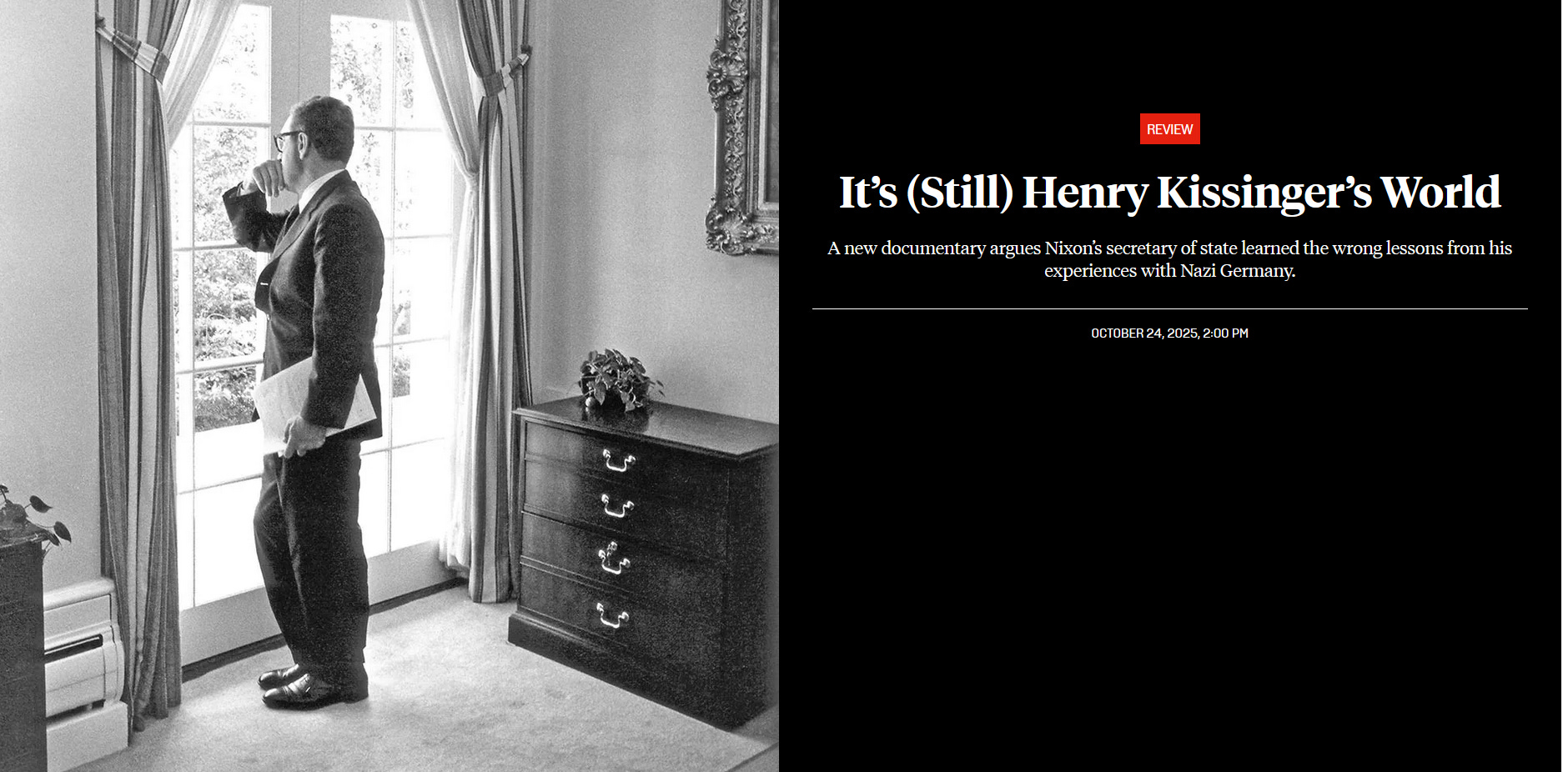
I. Realism’s World: Power Without People
Realism insists that states behave rationally in pursuit of national interest. Kissinger embodied this doctrine. His negotiations shaped détente with the Soviets, rapprochement with China, and the architecture of Middle East diplomacy. Yet these judgments often emerged not from democratic institutions but from Kissinger’s personal command.
As reported by Evan Osnos in The New Yorker, Kissinger’s approach to China was so clandestine that messages were hand-carried through Pakistan and even the Joint Chiefs secretly monitored his office. At a moment when Nixon was paralyzed by scandal and Ford lacked direction, Kissinger effectively became a single, unelected custodian of U.S. foreign policy. He defined the national interest according to his own imagination and fears. Rational statecraft collapsed into the instincts of one man.
What realism promised as impersonal calculation became deeply personalized power.
To continue engaging with rigorous analysis of international affairs and the evolving foundations of global power, please subscribe. Your readership enables and supports sustained, research-driven writing on these critical subjects.
II. When Maps Deceive: Power Beyond Territory
Kissinger rooted his worldview in geopolitics — the belief that strategic geography determines destiny. Great powers were those with space to maneuver, resources to command, and borders to fortify.
The modern world rebukes this assumption. Russia sprawls across land but wages wars that diminishes its influence. Power rooted in fear becomes a permanent insecurity. Meanwhile Taiwan, tiny and threatened, has become one of the world’s most indispensable economies through technological innovation and democratic resilience. It exercises influence by shaping what others need, not by seizing what others have.
The European Union’s Green Industrial Plan reinforces this transformation. Influence now emerges not from territorial control but from the ability to shape global rules and supply chains. Power has migrated from soil to silicon, from geography to imagination.
Kissinger’s map no longer matches the terrain of history.
III. The Collapse of Persuasive Power
Great powers once earned influence by offering a future that others wished to join. The United States led the postwar world not because it coerced allies but because it inspired them.
That gift has eroded. Hyper-nationalism and transactional alliances render persuasion obsolete. Many powerful states now rely on intimidation where once they relied on trust. Yet the locus of agency has shifted. In Africa, states such as Zambia and the Democratic Republic of the Congo insist that their natural wealth benefit their own societies rather than feed external empires. They refuse to be treated as pawns.
Order imposed from above fractures the moment obedience dries up. Real greatness now arises from shared purpose, not enforced hierarchy.
IV. Realism’s Blind Spot: The Unruly Human
Realism treats states as rational entities. But history is driven by irrational passions. If survival were everything, Adolf Hitler would have surrendered rather than drag his nation into annihilation. If calculation ruled history, Winston Churchill would have sought a pact with Hitler in 1940 instead of continuing a war Britain was certain to lose.
Political behavior cannot be reduced to strategy alone. Leaders act from humiliation, resentment, pride, and the desire for glory. Nations sacrifice for meaning, not merely for gain. Realism dismisses these forces as dangerous illusions. Yet they are the very engines of history.
The human heart is the wildcard realism refuses to account for — and the one that most often decides a nation’s fate.
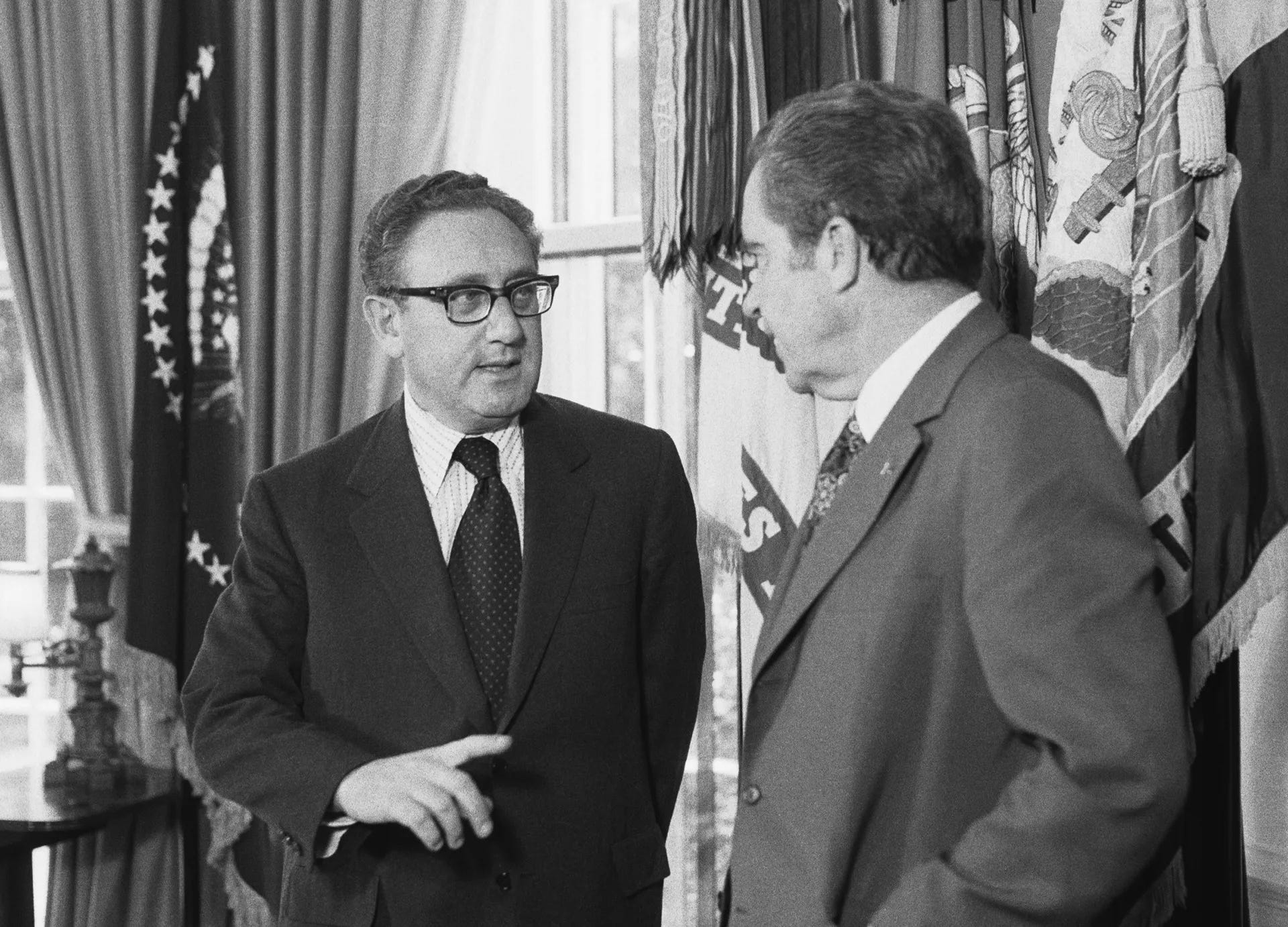
V. Kissinger’s Realism: Subjectivity Disguised as Science
Realism presents itself as objective truth. But Kissinger’s realist philosophy grew from personal conviction. As Thomas Meaney notes in The New Yorker, Kissinger viewed history as “a series of meaningless incidents, fleetingly given shape by the application of human will.” Strategy became his way of imposing order on chaos through sheer force of decision.
Where existentialists like Sartre saw action as responsibility, Kissinger saw action as liberation from uncertainty. Morality became optional — a luxury that power could not afford.
Far from neutral science, Kissinger’s realism was a projection of his own fears and faith in domination.
VI. The Poetic Origin of Nations
Realism imagines nations as rational instruments. Yet nations precede rationality. They arise from shared memories, cultural imagination, and collective longing. They are poems before they are policies. They survive not because tanks guard their borders but because people feel bound to one another by something more enduring than fear.
No empire stands without myth. No republic survives without ideals.
If foreign policy forgets this, strategy becomes sterile — and eventually self-destructive.
VII. States Serve Nations — Not the Other Way Around
Realists treat states as if they are autonomous minds. But states exist to serve nations — the people whose identity gives politics purpose. When the state’s pursuit of power no longer reflects the values and desires of its people, national interest becomes a hollow phrase.
History is littered with governments that mistook their strategic arrogance for the will of their nation. They led their societies to ruin because they assumed that rational doctrine mattered more than the human beings it was meant to protect.
The state is a vessel. The nation is the captain. When the vessel forgets the captain, it sinks.
VIII. The Ethical Poverty of Fear-Based Statecraft
Realism warns that idealism can be deadly. But realism’s indifference to morality has produced horrors of its own. Kissinger’s approach to the 1971 genocide in Bangladesh reveals the danger. Pakistan’s military was massacring Bengalis by the hundreds of thousands, and U.S. diplomats begged Washington to intervene. Kissinger dismissed them — because Pakistan was his secret bridge to China.
Strategy supplanted humanity. Fear of losing access mattered more than lives already lost. In this calculus, injustice becomes not merely tolerated but invisible. A foreign policy that ignores human dignity inevitably corrodes the society that practices it.
Realism without ethics is not realism. It is nihilism dressed as necessity.
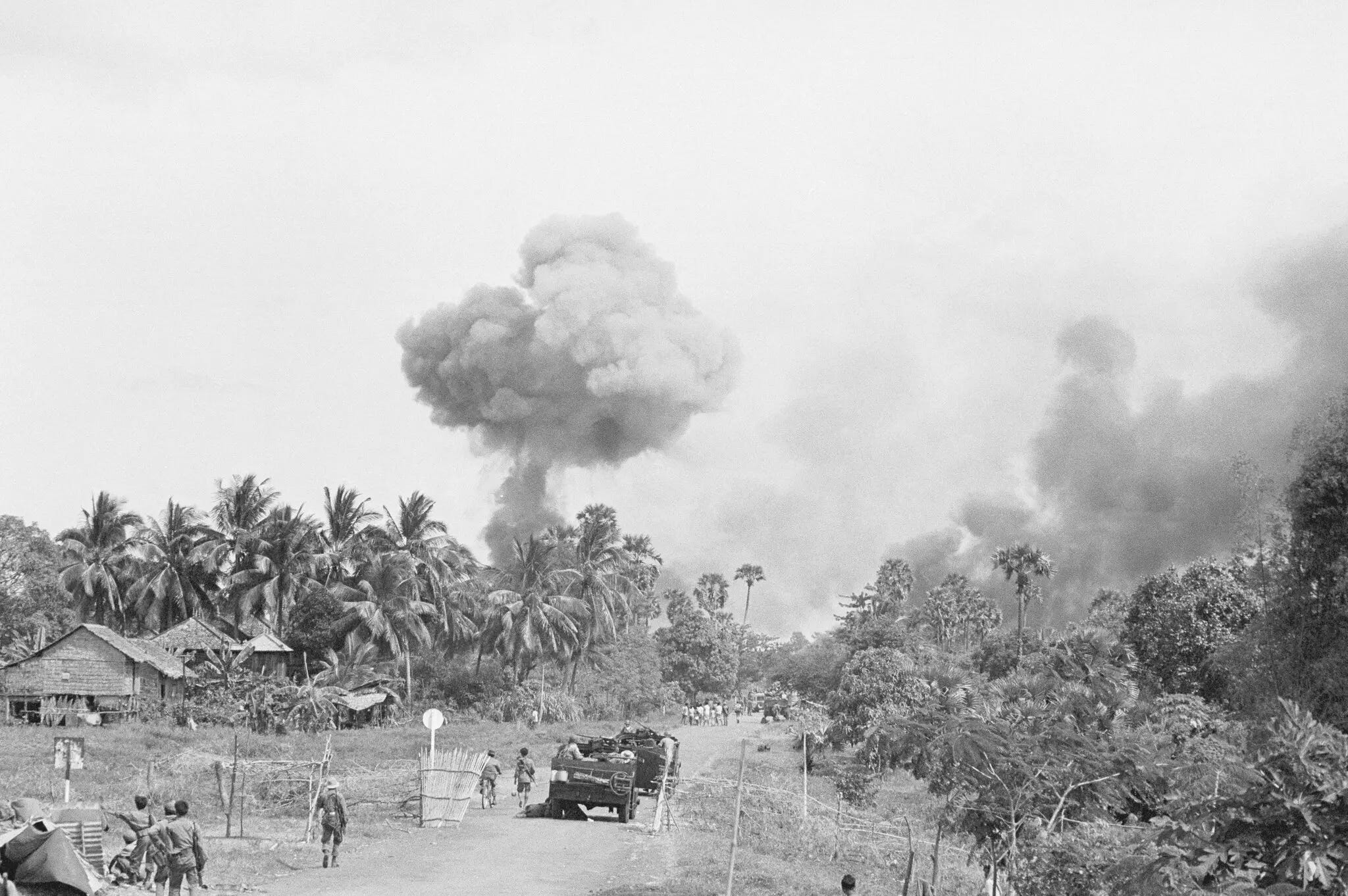
IX. Realism’s Obsolescence in a Threatened World
Kissinger’s worldview was designed for adversaries. Today’s most dangerous threats do not arise from rival states but from systems that are collapsing under the weight of human progress.
Climate change does not care about the balance of power. It swallows coasts regardless of which flag waves nearby. Pandemics glide across borders without negotiating terms. Artificial intelligence rewrites our capacities faster than regulators can respond. Democracy suffocates not when tanks roll in but when corruption, disinformation and despair hollow it from within.
These forces do not negotiate. They do not fear missiles. Stability in this century requires collaborative strength, not competitive dominance. Cooperation is not utopian dream — it is the new realpolitik for a species that must confront planetary threats collectively or perish separately.
X. When Idealism Turns Dangerous
Idealism has its own record of catastrophe. Dreams of virtue have often turned into nightmares of violence. Revolutionary terror in France, Japan’s imperial crusade, Soviet utopianism, the American invasion of Iraq — all show how moral fervor can justify destruction.
Realism is right to fear self-righteousness. But old realism swings too far the other way, dismissing value itself as a weakness. The lesson of history is not that ideals should be abandoned, but that ideals require restraint, accountability, and humility.
Neither naïve hope nor cynical fear will save humanity. We must navigate between them to find wisdom.
XI. Order Over Peace — A Revealing Priority
Kissinger’s ultimate goal was not peace but order. Chaos terrified him more than injustice. As Osnos observes, this fixation blinded him to the political agency of the weak — those he dismissed as obstacles to stability. Yet time and again, the marginalized have upended power structures. Order imposed from above inevitably cracks from below.
Peace without dignity is not peace.
Order without justice is not order.
The weak do not stay weak forever.
XII. A Realism Fit for Humanity
The next century demands a new strategic philosophy — one that recognizes humanity not as a problem to be controlled but as a possibility to be cultivated. Power now arises from persuasion, legitimacy, cooperation, shared prosperity, and moral inspiration. The nations that lead will be those that show others that their futures flourish together.
This is not softness. It is sustainable strength. It is what influence looks like in a world where domination is obsolete and solidarity is survival.
To navigate the future, we must build power with others, not against them.
Conclusion: Leaving the Bunker
Kissinger helped prevent nuclear calamity. For that, we owe him a measure of gratitude. But a worldview built for survival cannot guide a civilization capable of greatness. Humanity must not aspire merely to endure the darkness; it must become an architect of light.
Kissinger saw that ideals can collapse. He missed that without ideals, society collapses from within. The world to come belongs not to the engineers of fear but to the builders of hope. Survival was the mission of the past. Flourishing must be the mission of the future.
The age of fear is ending. The age of imagination must begin. It is time to step out of the bunker and claim the future that human beings, in all their irrational courage and wonder, are capable of creating.
Sources & Further Reading
Thomas Meaney, “The Myth of Henry Kissinger,” The New Yorker
Evan Osnos, “Henry Kissinger’s Hard Compromises,” The New Yorker
Julian E. Zelizer, “It’s (Still) Henry Kissinger’s World,” Foreign Policy
Kissinger (PBS: American Experience documentary)
Charles A. Kupchan, We Forget Henry Kissinger’s Effectiveness at Our Peril
Nicholas Kristof, Lessons From Kissinger’s Triumphs and Catastrophes
Gary J. Bass, Nixon and Kissinger’s Forgotten Shame
Comments